
From fixing a broken chair leg to repairing a leaky PVC pipe, the right repair adhesive can save time, money, and effort. Whether you're tackling home repairs, upcycling furniture, or bonding tough materials, knowing the best adhesive to use for your project - and how to use it properly - can make all the difference.
In this guide, we’ll explore what repair adhesives are, why they’re essential for DIYers, the different types of adhesives available, and how to apply them for reliable, long-lasting results.
What are repair adhesives?
Repair adhesives are products specifically formulated to bond, fill, or restore broken, cracked, or separated materials. Unlike basic glue sticks or tapes, these adhesives are designed for strength, durability, and compatibility with a wide range of materials including wood, metal, plastics, ceramics, rubber, and even concrete.
They come in various forms, from quick-setting liquids to heavy-duty pastes and gels. Whether it’s a quick fix or a permanent solution, there’s a repair adhesive for every job.
Why use repair adhesives?
Save time and money
Repairing something is almost always cheaper than replacing it - and faster than waiting for a professional.
Strong, durable bonds
With the many types available, repair adhesives are specifically engineered to handle stress, moisture, temperature fluctuations, and even impact.
Material versatility
Whether you’re working with wood, plastic, metal, glass, or rubber, there’s an adhesive that’s made to bond it.
Cleaner repairs
Most repair glues can be used with minimal tools and no drilling, making them ideal for indoor fixes or delicate materials.
Types of adhesives
Not all repair adhesives are created equal. From woodworking to plumbing, the right adhesive can make or break your repair. Here's a detailed guide to the most common types you'll find on the shelves:
Wood adhesives
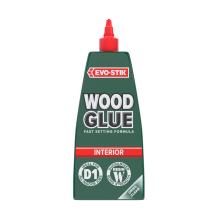
Wood glues are designed to bond wood-to-wood surfaces securely and seamlessly. They typically dry to a natural wood colour and can be sanded, painted, or stained once cured.
Features & benefits:
- Strong, durable bond for woodworking projects
- Dry clear for a tidy finish
- Available as interior wood glues and weatherproof, exterior wood glues
- Easy to apply and clean
Typical applications:
Ideal for furniture repairs, joinery, cabinetry, and wooden decorative pieces.
Recommended product: EVO-STIK Wood Glue Interior and EVO-STIK Wood Glue Exterior.
Tip: For best results, clamp the wood pieces together while the glue dries. For exterior use, ensure the surface is clean and dry before applying.
Contact adhesives
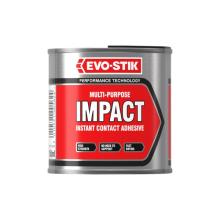
Contact adhesives form an instant, strong bond once both surfaces have been coated and the adhesive is dry to touch. Thanks to their ability to bond on contact, they’re ideal when clamping isn’t possible.
Features & benefits:
- High initial grab strength
- Bonds instantly upon contact - no need for clamping or support
- Flexible and resistant to heat and water
- Suitable for vertical surfaces
Typical applications:
Perfect for laminates, rubber, metal, leather, wood, and dense materials where immediate hold is needed.
Recommended product: EVO-STIK Impact Adhesive Tin, Impact Adhesive Tube and Impact Adhesive Spray. To remove contact adhesive, use EVO-STIK Impact Adhesive Cleaner.
Tip: Apply evenly to both surfaces, allow to dry for a few minutes until tacky, then press together firmly. There’s no repositioning, so align carefully!
Super glues
Super glues, also known as cyanoacrylate adhesives, are fast-acting, high-strength adhesives that bond almost instantly when exposed to moisture in the air. They’re ideal for precise, small-scale repairs that require an immediate hold.
Features & benefits:
- Ultra-fast setting time - just a few seconds!
- Strong, permanent bond
- Works on a wide range of materials
- Clear drying for a discreet finish
Typical applications:
Best for fixing ceramics, plastics, glass, metal, jewellery, and small household items with fine or narrow bonding surfaces.
Recommended product: Bostik Super Glue Liquid, Bostik Super Glue Non-Drip Gel, Bostik Super Glue Easy Flow Liquid.
Related article: Everything you need to know: Super Glue.
Tip: Use sparingly - a little goes a long way. Avoid skin contact and always recap tightly to prevent drying out.
Pipe weld adhesives
Pipe weld adhesives are solvent-based solutions designed to chemically bond rigid PVC components, creating a leakproof seal.
Features & benefits:
- Creates a fused, watertight joint
- Fast-setting and long-lasting
- Resistant to water and pressure
- Safe for plumbing and outdoor use
Typical applications:
Used for repairing or joining rigid PVC pipes in irrigation systems, drains, and household plumbing.
Recommended product: EVO-STIK Pipe Weld.
Tip: Ensure pipe ends are cut cleanly and free from dust or moisture. Apply evenly, push components together firmly, and hold briefly while the bond sets.
Epoxy adhesives
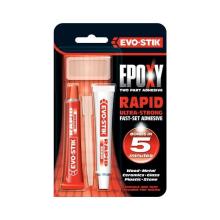
Epoxies are two-part adhesives that cure to a tough, durable finish. They're excellent for high-strength, permanent repairs on a variety of surfaces.
Features & benefits:
- Incredibly strong bond
- Resistant to heat, water, and some chemicals
- Gap-filling and can be sanded down
- Bonds metal, ceramics, wood, and more
Typical applications:
Great for repairing broken tools, ceramics, metal fixtures, and structural components.
Recommended product: EVO-STIK Epoxy Rapid Tubes, EVO-STIK Epoxy Rapid Syringe, EVO-STIK Hard & Fast Metal Epoxy Putty.
Tip: Mix only what you need. For small, detailed repairs, use the syringe version for precision. The putty is great for shaping or rebuilding broken parts.
Grab adhesives
Grab adhesives are thick, high-tack adhesives designed to hold materials in place immediately - without nails, screws, or clamping.
Features & benefits:
- Instant grab and long-term strength
- Gap-filling for uneven surfaces
- Suitable for indoor and outdoor use
- Water- and weather-resistant options available
Typical applications:
Ideal for bonding panels, skirting boards, trims, heavy items, and fixing things where mechanical fasteners aren’t suitable.
Recommended product: EVO-STIK Seriously Strong Stuff Fast-Setting Adhesive, Seriously Strong Stuff Ultimate Adhesive, Strong Stuff Waterproof Adhesive, Liquid Nails Interior and Liquid Nails Exterior.
Tip: Apply in dots or a zig-zag pattern for the strongest hold. For heavier items, support the object while the adhesive cures fully.
Step-by-step: how to use repair adhesives
What you will need:
- Chosen adhesive
- Applicator (brush, caulking gun, or mixing tray depending on type)
- Clamps (for wood/epoxy jobs)
- Cleaning cloth
- Safety gloves and ventilation if needed
Optional:
- Protective gloves and safety goggles
- Masking tape
1. Assess the damage
Understand what you’re repairing. Is it structural? Cosmetic? Will it be exposed to heat, moisture, or load? This will guide your adhesive choice.
2. Clean the surfaces
Remove dust, oil, and old adhesive. For some glues (like contact or epoxy), a light sanding improves grip.
3. Apply the adhesive
Follow the specific instructions on the pack:
- Wood glue: Apply one side, clamp tightly
- Contact adhesive: Coat both surfaces, wait for tackiness, then press
- 2 part epoxy: Mix equal parts thoroughly, then apply
- Pipe weld: Apply primer, then cement, push together immediately
- Grab adhesive: Open and load cartridge and squeeze trigger to apply even amounts of adhesive in a zigzag pattern
4. Press together
Align carefully. For fast-setting adhesives, you may only get one chance. Apply pressure evenly—clamps are your best friend for long-lasting bonds.
5. Clean up excess
Clean up any squeeze-out with a damp cloth or the recommended solvent while the adhesive is still wet.
6. Allow to fully cure
Let it set for the full recommended time before handling. Some products feel dry in minutes but don’t reach full strength for 24–48 hours.
Conclusion
Repair adhesives are some of the most versatile and powerful tools a DIYer can have. With the right product and a little know-how, you can fix just about anything - furniture, pipes, tiles, trim, and more. Whether it’s a quick mend or a full rebuild, choosing the correct adhesive and applying it properly will ensure your repairs last.
Next time something breaks, don’t bin it, fix it and become a #REPAIRHERO!