
If you've ever picked up a glue bottle in a DIY store or used white glue at school, chances are you've already met PVA adhesive. But there’s more to this handy product than most people realise.
Here’s the lowdown on what PVA glue is, why it’s great, the different types, and how to apply PVA glue like a professional - even if you're just starting out.
What is pva glue?
PVA stands for polyvinyl acetate - a type of synthetic resin that turns into a strong, flexible bond when it dries. It’s that white, runny stuff you probably used in school, but in the DIY world it’s a versatile adhesive, primer, and sealer all rolled into one.
PVA adhesive dries clear, is super simple to apply, and it’s non-toxic, making it ideal for home projects, both indoors and out.
Why use PVA glue?
- It’s super versatile: Seals, bonds and primes wood and plaster
- It dries clear: No need to worry about it ruining your paint finish. In fact, in arts and craft projects, PVA glue is often used as a topcoat to create a glossy finish.
- Low cost, high value: PVA can do everything from bonding wood to prepping a wall.
- Water-based and easy to clean: Just rinse your brush or tools in warm soapy water.
Types of PVA adhesive
Not all PVA glues are the same. Here are the most common ones you'll see on the shelves from EVO-STIK:
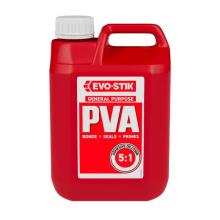
General Purpose PVA
This is your everyday go-to. Great for woodworking, crafts, light DIY repairs and bonding porous materials.
Super Concentrated PVA
A more powerful formula that can be diluted down or used neat for a seriously strong bond. Ideal when you want better coverage, more grip or a longer-lasting seal.
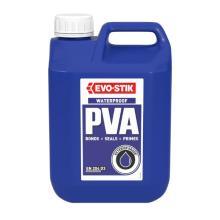
Waterproof PVA
Perfect for outdoor projects or damp environments like bathrooms and kitchens. It resists moisture better than standard PVA, though it’s not totally waterproof once diluted.
Shop: EVO-STIK Waterproof PVA
Contractors PVA
Specifically designed for the trade for use as a primer and sealer for porous substrates. It is a plaster bonding agent, priming a wide range of substrates, helping to regulate surface porosity and prevent uneven drying which can lead to cracking. When used as a sealer, it reduces dust and stabilises the surface for improved finish quality.
Shop: EVO-STIK Contractors PVA
Top uses for PVA adhesive
If you've found yourself thinking 'what is PVA glue used for?', you'll be surprised how much this glue can do! Here are the three best ways to use PVA adhesive:
1. Priming
You can use PVA as a primer. Before plastering or repairing cracks in a wall, apply PVA to seal dusty or porous surfaces so your plaster or filler sticks better and goes further.
2. Bonding
The most common way to use PVA adhesive is for bonding surfaces together. Use it to glue wood, paper, fabric, plasterboard, decorative mouldings and more - its versatility and strength makes it suitable for many materials.
3. Sealing
Finally, you can use PVA as a sealer for internal concrete, screeds or old plaster to help prevent dusting.
Step-by-step: How to apply PVA glue for three different uses:
When it comes to applying PVA adhesive, there are different methods for the different uses. Let’s break it down step-by-step so you get it right every time.
1. Priming with PVA
Great for: Creating a tacky surface for other substrates to adhere to. Perfect for use prior to plastering - whether bonding new plaster to porous or non-porous surfaces!
What you need:
- Your choice of PVA: General Purpose PVA, Super Concentrated PVA or Contractors PVA
- Mixing bucket
- Clean water
- Paintbrush, roller or spreader
Steps for porous surfaces: e.g. brickwork, sand or cement renders, cement sheets, old plaster and timber
- Dilute the PVA by mixing one-part PVA with four-parts water.
- Apply a thin, even coat, making sure the surface gets fully covered.
- Let it dry - wait until it feels tacky before plastering over.
Top tip: For very porous surfaces, two coats may be needed.
Steps for non-porous surfaces: e.g. glazed tiles and sound, oil painted surfaces
- Apply a thin, even coat of undiluted PVA, making sure the surface gets fully covered.
- Let it dry - wait until it feels tacky before plastering over.
2. Bonding with PVA
Great for: Adhering most materials together to create strong, long-lasting, yet flexible bonds. Bonding wood to wood is a popular choice for most!
What you need:
- Your choice of PVA: General Purpose PVA or Super Concentrated PVA
- Paintbrush, roller or spreader
Steps for porous surfaces: e.g. wood, brick and concrete
- Clean the surfaces by removing any dust, grease, or flaky paint. Prime the area as recommended above if required on porous surfaces.
- Apply the PVA, undiluted, onto one surface.
- Press the surfaces together - use clamps or heavy weights, if needed.
- Leave to dry - most bonds set within 1 hour; full bond strength is achieved in 24 hours.
Steps for non-porous surfaces: e.g. glazed tiles and sound, oil painted surfaces - please note, one of the surfaces to be bonded must be porous
- Apply undiluted PVA onto one surface.
- Press the surfaces together - use clamps or heavy weights, if needed.
- Leave to dry - most bonds set within an hour; full bond strength is achieved in 24 hours.
3. Sealing with PVA
Great for: Dusty concrete floors, plastered walls, or flaky surfaces that needs stabilising.
What you need:
- Your choice of PVA: General Purpose PVA, Super Concentrated PVA or Contractors PVA
- Mixing bucket
- Clean water
- Paintbrush, roller or spreader
Steps:
- Clean the surface by brushing away any loose dust or debris.
- Dilute one-part PVA to four parts water and mix well.
- Apply generously using a wide paintbrush or roller to cover the whole area.
- Let it dry fully – this can take a few hours depending on temperature and humidity.
- Once dry, reapply a second coat, if required.
External use
EVO-STIK Waterproof PVA is specially formulated for outdoor jobs where standard PVA just won’t cut it. Its advanced, water-resistant formula means it performs reliably in damp, humid or exposed environments, making it ideal for external brickwork, render, timber projects and areas that face regular weathering. Unlike conventional PVA, it doesn’t need an additional sealer on top – the waterproofing is built directly into the formula, so once it’s dry, it forms a tough, protective barrier that stands up to the elements. That means fewer steps, less hassle, and a longer-lasting finish for your outdoor projects.
Final thoughts
PVA adhesive might not look flashy, but it’s one of the most useful items in any DIY toolkit. Whether you’re sticking, sealing or prepping, PVA is perfect for almost every job. It's cost-effective, DIY-friendly, and reliable, and once you start using it properly, you’ll wonder how you ever managed without it.