
Flexible Decorators Filler
EVO-STIK Flexible Decorators Filler is the ideal solution for filling gaps, cracks, and joints around your home before painting or wallpapering. Specially designed with flexibility in mind, it won’t crack as surfaces expand and contract, making it perfect for use on interior walls, ceilings, and woodwork.
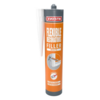
White
Features and benefits
Whether you’re preparing a room for a fresh coat of paint or tidying up after fitting skirting boards or coving, this easy-to-apply white decorator’s caulk provides a smooth, professional finish with minimal effort.
EVO-STIK Flexible Decorators Filler adheres to most common materials found in the home, including plaster, wood, brick, and concrete. It’s ideal for sealing gaps between skirting boards, door and window frames, architraves, and walls - creating a neat, polished look in any room.
Plus, this EVO-STIK Flexible Decorators Filler can be sanded, painted or papered over, and does not crack or crumble, giving you long-lasting results!
Suitable materials: Plaster, plasterboard, window frames, door frames, skirting boards, coving.
Coverage: Approx. 11m of a 5mm bead per cartridge.

A white, flexible decorator’s filler that resists cracking and movement
Ideal for filling in cracks, gaps and cavities around the home
Suitable for interior use on walls, ceilings, woodworking and more
It can be sanded, painted or papered over within 24 hours
Easy to apply - our best decorator’s filler for DIYers
Available as a white decorator’s caulk
Downloads & resources
Flexible Decorators Filler - Technical Data Sheet (262.74 KB)
This file is stored on an external website, please follow the link
How to use
Preparation
1. Joint surfaces must be sound, clean and free from contaminants such as dust, oil, grease and any loose material. Very porous surfaces must be primed using a diluted PVA.
2. When the product is used to fill gaps, the temporary use of masking tape to define edges of the joint will often give a cleaner, neater look. Always remove masking tape before the filler skins, which usually takes between 15 to 60 minutes, but is dependent upon drying conditions.
Application
3. Unscrew the nozzle, and using a sharp knife, carefully cut off the dome of the flexible decorators filler, taking care not to damage the thread. Screw the nozzle on to the cartridge.
4. Cut off the tapered end of the nozzle at a 45° angle, to a width matching the gap to be filled.
5. Fit the cartridge into the cartridge gun by pressing the release plate and pulling out the plunger. Insert cartridge and repeatedly squeeze the trigger until the filler appears.
6. Place the nozzle at the start of the gap and gently squeeze the trigger. Push forward slowly, ensuring that contact is made by the filler with both sides of the gap. At the end of the run, release the trigger and press the plunger release plate of the gun.
7. Remove excess filler immediately with a flat blade to give a nice, smooth finish.
8. After use, ensure to wipe away any excess adhesive from the nozzle. Replace the cap.
Painting Flexible Decorators Filler
- Painting of the filler should only be carried out once it has fully dried. Painting too early may lead to the paint cracking.
- For fine filling and for applications less than 1mm, painting may be carried out in as little as 30 minutes.
- When used for filling gaps around frames, skirting and similar, where the filler may have a depth greater than 5mm, drying times will be much longer. Leave at least 24 hours before painting.
How to remove
- Uncured sealant: Excess uncured sealant should be removed carefully using a soft scraper. The remainder can be removed using a cloth moistened with white spirit. Repeat using another clean cloth moistened with white spirit.
- Cured sealant: There is no adequate solvent; carefully cut away excess with a very sharp knife. Do not use solvent to remove product from skin – use soap and water.
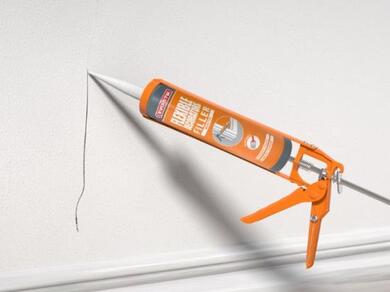
Related tutorials
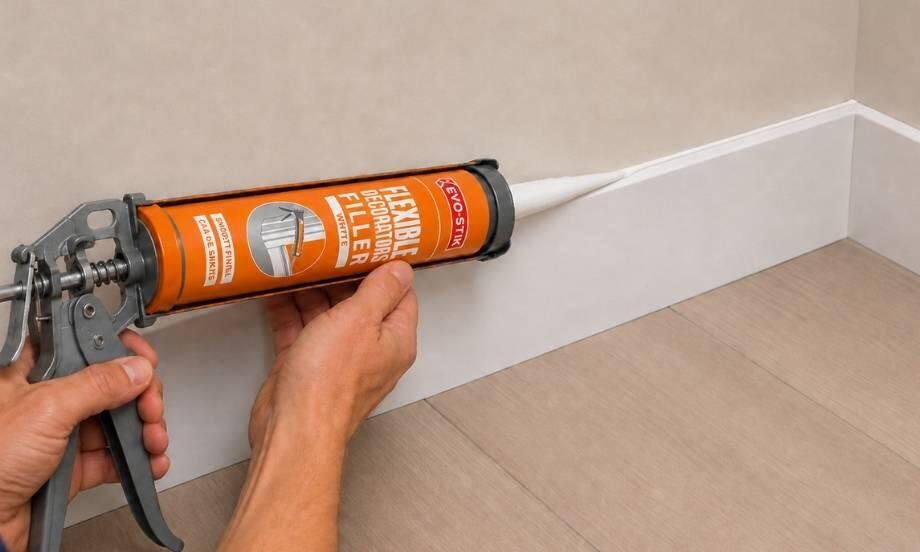
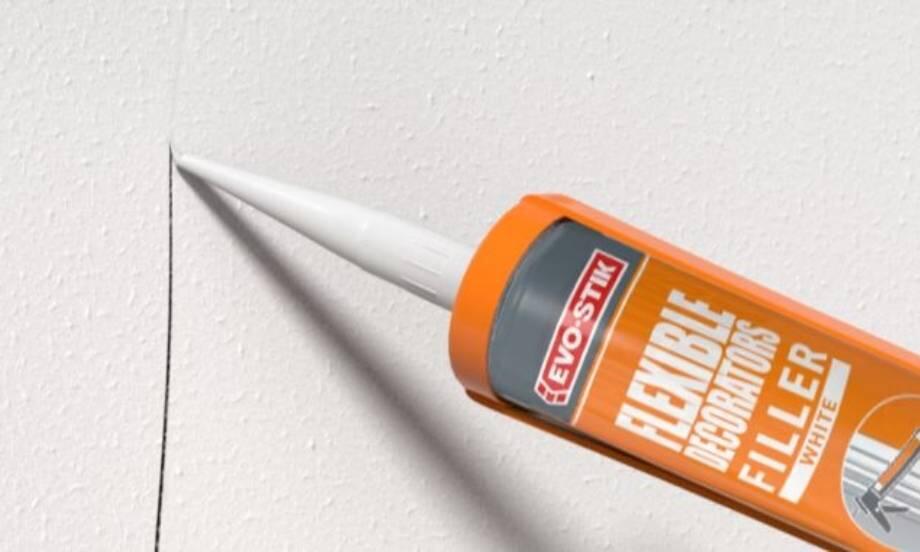
FAQs
Can I use caulk to seal the bottom of the skirting boards?
No – we recommend using a sealant for bonding the bottom of skirting boards instead of caulk. Caulk is best applied to the top of skirting boards.
If you’re looking for a guide on how to stick skirting to a wall or sealing your skirting boards, discover our articles here: how to apply skirting boards and how to seal skirting boards.
How do I remove excess Flexible Decorators Filler?
Excess EVO-STIK Flexible Decorators Filler sealant should be carefully scraped away using a knife and the remaining film wiped away immediately with a clean cloth damped with warm soapy water. Set sealant can only be removed mechanically using a sharp knife or scraper.
How soon can I paint Flexible Decorators Filler?
As soon as EVO-STIK Flexible Decorators Filler is dry through. For thin layers less than 1mm, this could be as little as 30 minutes in good drying conditions. For thicker layers and less than ideal conditions, it could take a full day, or even longer if it’s very thick. Since this sealant shrinks as it dries, the surface stretches and this could crack a paint film if it was applied too soon.
Should I paint or caulk first?
You should caulk before you paint. EVO-STIK Flexible Decorators Filler can be painted over, so it makes sense to caulk before you paint. Occasionally, people may prefer to prime the surface before a caulk application. However, caulk should always be the first step before topcoats of paint are applied.
What is the difference between caulk and sealant?
- Caulk is for neat finishing indoors, like filling gaps around skirting boards or window frames before painting. It dries hard and can be painted over.
- Sealant stays rubbery and flexible, making it perfect for kitchens and bathrooms where gaps need to stay watertight. It won’t usually take paint, but it stops leaks and handles movement well.
Think of it this way: caulk for a paintable finish, sealant for a waterproof seal.


Find new, smarter ways of doing things
Find out what product you need, how to use it and where to buy it.
PRODUCT FINDER